It is time to cease searching for a miracle woven into the Shroud of Turin’s threads and to appreciate the Shroud for what the converging evidence reveals it to be: a compelling medieval French artefact that has become the world’s most intensively studied biological and historical palimpsest. – Aravindan Neelakandan
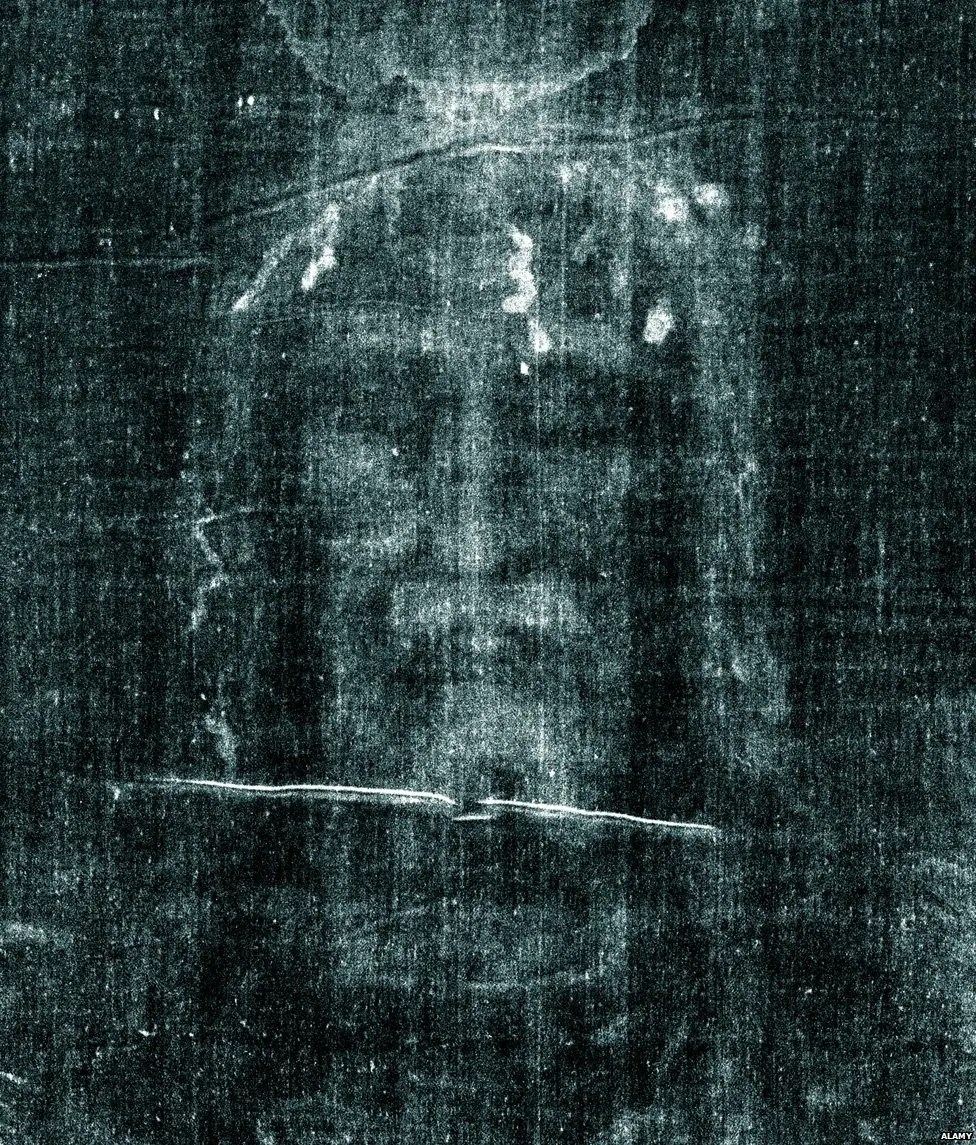
The Shroud of Turin has once again emerged from the quietude of its reliquary to capture the global headlines, this time bearing a provocative Indian connection that has set the Indian press ablaze with excitement.
The timing is strategically precise—a seasonal resurgence of relic-interest and devotion coinciding with the arrival of Easter.
Yet, while the narrative of an ancient Indus textile holds a certain romantic allure, a deeper descent into the Shroud’s chequered history suggests that the reality is far more convoluted than the straightforward miracle many long to see.
History does not encounter the Shroud in the dim silence of a first-century tomb; it finds it instead in the high-medieval clamor of 1350s France.
It is in the small village of Lirey, circa 1354, that this linen sheet first makes its not-so-credible entrance into the record. Owned by the knight Geoffroy de Charny, the cloth appeared not as a confirmed relic of the Passion, but as the centerpiece of a local church’s fund-raising efforts, an arrival so suspicious that it was promptly denounced by Henri de Poitiers, the Bishop of Troyes, as a “cunningly painted” forgery.
However, the Shroud’s transformation from a medieval curiosity into a modern “scientific” enigma occurred centuries later, in 1898. It was then that amateur photographer Secondo Pia took the first official photographs of the cloth during its exhibition in Turin.
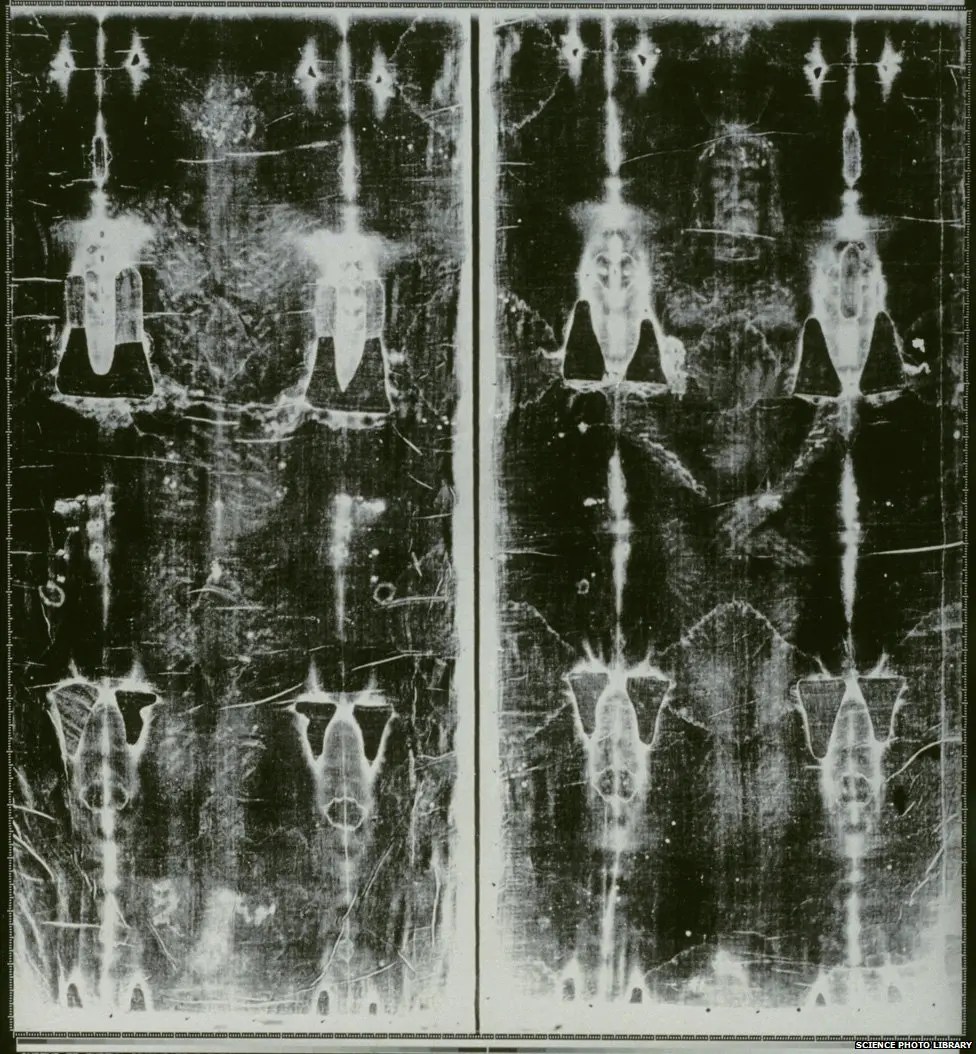
Upon developing his glass plates late that May evening, Pia was stunned to find that the pale, brownish image on the linen, barely visible to the naked eye, acted as a photographic negative, revealing a shockingly lifelike, detailed “positive” image of a crucified man on the plate. He was so astonished he nearly dropped the fragile glass.
This discovery of a “photographic” image long before the invention of photography became the bedrock of modern sindonology—-the study of this mysterious shroud, launching an era in which the artefact served as the ultimate proof for believers.
Yet, it also opened the relic to growing forensic scrutiny that would intensify through the 20th century, culminating in rigorous scientific examinations, including the landmark 1978 STURP project (Shroud of Turin Research Project) and later genetic studies that have revealed a complex mosaic of ancient and medieval DNA traces from multiple continents.
Yet, as our analytical tools have grown more precise, the artefact has drifted away from the categorical binary so integral to history-centric religions. What was once a definitive “yes” or “no” has dissolved into a profound Rorschach test for the intersection of faith and forensic science- a mirror reflecting evidentiary biases.
As we enter 2026, a fresh battery of high-resolution metagenomic and serological analyses has provided us with a far more mundane, yet far more fascinating, reality, the latest being the work of Gianni Barcaccia which has created quite a sensation. This is a preprint and not yet peer-reviewed as of early April 2026.
By performing kinship analysis, the researchers discovered that the most prominent human DNA profile on the cloth, Haplogroup K1a1b1a. is a direct, first-degree match for the late Professor Pierluigi Baima Bollone.
Who was Bollone?
He was the official collector who vacuumed the samples during the 1978 Shroud of Turin Research Project (STURP).
Bollone’s lineage is typical of Ashkenazi Jews. Without the context of who handled the cloth, an eager “sindonologist” could easily have presented this as “proof” of the Shroud’s Palestinian origin. Instead, it serves as a profound cautionary tale. If the strongest genetic signal on the artefact belongs to a 20th—century researcher, then the cloth is so thoroughly contaminated by modern handlers that identifying the “original” DNA of a 1st -century victim is as of date almost a scientific impossibility.
The Botanical Floor: The 16th-Century Carrot
While human DNA transfers with alarming ease through a mere touch or sneeze, plant DNA is often viewed as a more enduring archive of an object’s long journey through time and space. For decades, pro-authentic-Shroud supporters have pointed to traces of Middle Eastern pollen as a botanical “map” charting the Shroud’s supposed path from Jerusalem to Turin.
Yet the 2026 metagenomic analysis revealed something far more telling than ancient pollen grains: Daucus carota, the common carrot. Specifically, the dominant carrot DNA on the Shroud genetically aligns with “early improved” and modern orange cultivars selectively bred by Dutch and Spanish growers in the 15th and 16th centuries.
This finding, representing approximately 30.9 per cent of all assigned plant contaminants, establishes what scholars term a clear chronological floor. The vibrant orange carrot familiar today did not exist in the 1st century.
Alongside this prominent European signal, the study identified DNA from post-Columbian ‘New World’ species, including maize (Zea mays), peanuts (Arachis spp.), and other crops such as peppers, tomatoes, and potatoes from the Solanaceae family. These plants only reached Europe after Christopher Columbus’s voyages beginning in 1492.
If the Shroud so readily accumulated genetic traces from 16th -century Dutch gardens and newly introduced American species, then the presence of Mediterranean or Near Eastern flora no longer serves as compelling evidence of a 1st -century origin origin. Instead, it simply confirms what one would expect: a linen cloth that has resided in Europe for roughly seven centuries will inevitably gather a rich, layered record of the very global trade, agriculture, and human contact that defined the late medieval and early modern eras.
Perhaps no claim sits more centrally in the Shroud’s enduring mythos than the confident assertion that its stains contain “human, male, Type AB blood”. This “fact” has long been invoked to forge links with other relics, such as the Sudarium of Oviedo, weaving a compelling web of shared evidence supposedly pointing to a single ancient source.
Yet, immunologists have rigorously demonstrated that the Type AB designation stands as a classic illustration of how aged, heavily handled materials can mislead even earnest investigators. The foundational reports trace primarily to Pierluigi Baima Bollone’s work in the early 1980s, published in Shroud-specialty outlets rather than peer-reviewed forensic or immunological journals, and have not been independently replicated with modern controls.
Two fundamental scientific challenges undermine the claim.
First, ABO mimicry: the A and B blood-group antigens are carbohydrate structures not unique to human red blood cells. Many common environmental bacteria, and even some fungi, express chemically identical surface antigens.
On a textile as microbially rich as the Shroud, where microscopic studies have revealed heavy bacterial and fungal contamination especially within the bloodstained areas, a positive reaction for both A and B antigens is readily explained by microbial biofilms rather than (or in addition to) ancient human blood. Notably, STURP chemist Alan Adler himself voiced serious reservations about the AB typing for precisely this reason of shared carbohydrates.
Second, the degradation effect in aged samples: serological blood typing depends on the functional binding of antibodies. Over centuries, these reagents can lose effectiveness, and the absence of detectable anti-A or anti-B reactivity (a common outcome in degraded material) is frequently misinterpreted as evidence of both antigens being present, yielding an apparent AB profile regardless of the original blood type.
In short, calling the Shroud’s stains definitively “Type AB” represents an unwarranted interpretive leap that overlooks the inherent biochemical fragility of serological methods when applied to ancient, contaminated artefacts.
The Indian Connection: A Medieval Luxury Trade
One of the more provocative findings in the recent Barcaccia studies is the “Indian trace”, a significant percentage of DNA (up to 40 per cent in some samples) belonging to lineages from the Indian subcontinent. Proponents have jumped on this to suggest that the Shroud might be the “Hindoyin” vestments mentioned in Rabbinic texts, implying a 1st century luxury manufacture.
But the objective historian looks at the calendar. While the Romans did trade with India in the first century, the medieval textile trade was equally, if not more, robust. During the 13th and 14th centuries, the exact window provided by the 1988 radiocarbon dating, the Red Sea trade routes were flooding the Mediterranean with “Sindon” (fine linen) and yarn from India.
A 14th century artist or weaver in France or Italy looking to create a “holy relic” would have had easy access to these exotic, high-quality materials. The Indian genetic signal does not point to a 1st century miracle; it points to the 14th century global textile market.
The Indian genetic signal, embedded in a cloth already bearing heavy post-1492 New World plant DNA, dominant modern handler contamination (including from Pierluigi Baima Bollone), and Renaissance-era carrot cultivars, does not compellingly point to a first century miracle. Rather, it aligns seamlessly with the documented medieval European context, a time when an ambitious forger could source premium imported linen to lend authenticity to the artefact.
The Problem of Believing Researchers and Sensational Media
Finally, we must confront the aggrandisement of data, the persistent tendency to inflate weak or flawed findings into cornerstone evidence.
In 2017, a study published in PLOS ONE claimed that nanoparticles of creatinine bound to ferritin on Shroud fibers constituted “proof” of severe polytrauma consistent with crucifixion, even suggesting that “at the nanoscale it is encoded a scenario of great suffering”.
The paper was retracted in 2018, over the authors’ objections, because it lacked essential controls (such as period-ink or animal-blood comparisons) and failed to establish that the material was definitively human blood or linked to trauma. The editors explicitly noted concerns over the validity of the conclusions and their reproducibility.
Yet, as immunologist Kelly P. Kearse has documented in his 2025 analyses of Shroud research and how it is reported in the media, some pro-authenticity researchers continue to cite this retracted work as “microscopic confirmation” of the Gospels’ account of torture.
One of the original authors referenced it again in a 2024 paper on the subject of Jesus’ torments. This pattern of refusing to relinquish a “fact” once it has been formally withdrawn, exemplifies a troubling hallmark in parts of Shroud research: the elevation of invalidated data into enduring proof.
When core claims of pathological or forensic evidence for a direct recording of the Passion rest on such shaky foundations, alongside unreliable ABO blood typing, pervasive contamination in metagenomic samples, and the radiocarbon dating placing the linen in the 1260–1390 CE range, the grand narrative of the Shroud as an objective scientific witness to the events of the first century begins to fray.
The Shroud of Turin remains a remarkable object, haunting in its image, layered in its history, and endlessly fascinating in its scientific puzzles. Yet it is not a miraculous snapshot of a divine event. It is a dense, human archive shaped by centuries of interaction.
It speaks of medieval trade networks that brought fine Indian linens and yarns into Mediterranean markets, of the dramatic 1532 fire in Chambéry and the careful repairs by Poor Clare nuns in 1534 (with further mending in 1694), of the cool, humid conditions of its Alpine custodianship, and of the well-intentioned but contaminating hands of 20th-century investigators—including the very scientists who vacuumed its dust in 1978.
The latest 2026 metagenomic evidence does not validate the Shroud’s claimed first century antiquity. As the study’s authors themselves caution, metagenomics cannot determine the age of the cloth or provide robust support for either a medieval or ancient origin. Instead, it offers a vivid catalogue of how any textile preserved and venerated for centuries inevitably accumulates a biological palimpsest: traces of Near Eastern and Indian lineages, Renaissance-era European carrots, post-Columbian New World plants, halophilic microbes, and dominant modern handler DNA.
In the context of India with the evangelical forces spreading pseudo-historical claims of an ancient “Thomas Christianity”, the misreporting of Indian connection as if Indian linen was used to cover the body of Jesus could play quite a lot of mischief.
What we behold on the Shroud is not the face of a crucified god, but the accumulated genetic echoes of countless pilgrims, devotees, handlers, and researchers who have reached out to touch, pray over, display, and study it across seven centuries. It is a testament to human faith, ingenuity, commerce and, yes, the very human impulse to seek the sacred in the material.
It is time to cease searching for a miracle woven into its threads and to appreciate the Shroud for what the converging evidence reveals it to be: a compelling medieval artefact that has become the world’s most intensively studied biological and historical palimpsest.
To insist otherwise, while selectively championing science when it appears supportive and setting it aside when it does not, is to surrender the very rigour that genuine inquiry demands. – Swarajya, 7 april 2026




















 ACTA INDICA