The Catholic Church is consolidating elites, capturing Africa’s demographics, and weaponising caste politics in India. … If Hindus do not fast-track the adaptation of their stagnant traditional institutions, they will watch as the Church writes the hero’s narrative and Hindu Dharma becomes a museum piece—fascinating, perhaps, but a memory. – Aravindan Neelakandan
The modern Hindu mind suffers from a peculiar optical illusion. Observing the empty pews of Western Europe and the liberalised debates of North American seminaries, many Hindus have concluded prematurely that the Roman Catholic Church is a spent civilisational force, a crumbling relic of a pre-scientific age. Their characterisation of the Church rarely extends beyond its darkest medieval chapters: witch-hunting, Galileo’s trial, the Inquisition’s pyres.
They assume the Catholic Church has ceased to exist as a force in the West.
This is a miscalculation, and it operates at two levels.
The Church and Institutional Science
Far from the tired caricature of the Galileo conflict, the Catholic Church has long cultivated institutional science. That stewardship stretches back through the medieval scholars who preserved and refined Aristotelian inquiry and through St. Albert, the Dominican polymath, but it finds its most enduring emblem in the Vatican Observatory, one of the world’s oldest living astronomical institutions, formally established in 1891 by Leo XIII.
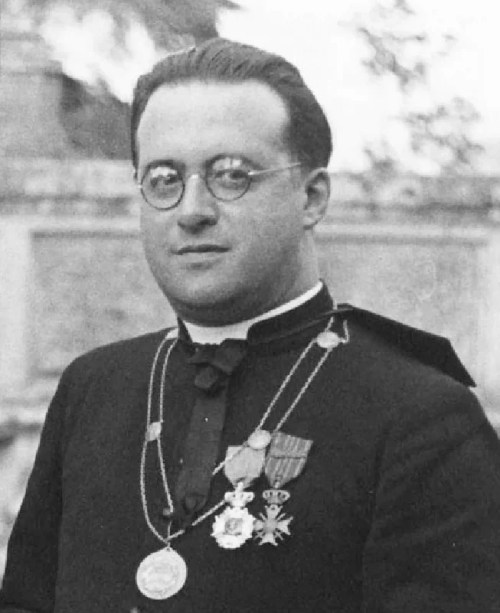
There, Jesuit pioneers like Father Angelo Secchi classified stars by their spectra in the nineteenth century, while modern researchers at the Vatican Advanced Technology Telescope in Arizona have advanced our understanding of stellar evolution, exoplanets, and the physics of the early universe, devising mathematical models of cosmological inflation and probing the nature of gravity in the first fleeting instants after the primordial explosion. It was the Belgian priest and mathematician Georges Lemaître who, in 1927, first proposed the expanding universe—later dubbed the Big Bang—drawing on Einstein’s relativity to reveal a cosmos born from a singular, radiant point.
The Catholic Church remains the single largest religious institution with a sustained, formal engagement with modern science. That fact alone should give Hindu commentators pause.
Gen Z and the Catholic Revival
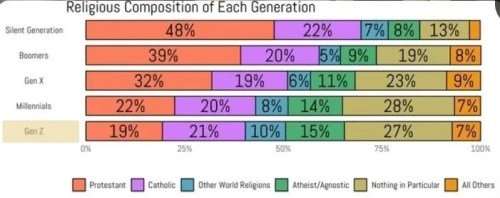
Perhaps most striking is the 2023 Cooperative Election Study (CES), which recorded 21 per cent of Gen Z adults identifying as Catholic compared to 19 per cent as Protestant—the first time in modern American history that Catholics outnumbered Protestants in any generation. This is despite charismatic right-wing evangelism receiving a boost under Trump.
The crossover, however, appears largely driven by a sharper decline in Protestant identification rather than a broad surge in Catholic affiliation. Subsequent analyses and co-directors of the CES have noted the 2023 figure as an outlier, with Catholic identification among Gen Z more typically hovering in the 14–16 per cent range when bench-marked against other major surveys.
The pattern is not confined to the United States. In the UK, YouGov polling and the Bible Society’s Quiet Revival report—later subject to methodological debate and partial retraction—highlighted a notable rise in religious interest among the young: belief in God among 18–24-year-olds climbed sharply from around 16 per cent in 2021 to as high as 45 per cent in early 2025 polling, while monthly church attendance in that cohort reportedly rose from 4 per cent in 2018 to 16 per cent—with young men reaching 21 per cent. Among regular young churchgoers, Catholics now outnumber Anglicans in several datasets.
What distinguishes this shift is its character. Many young Catholics are not returning to the modernised, low-commitment expressions dominant in the late twentieth century. Instead, a visible segment — often dubbed the ‘Trad’ revival—gravitates towards the fuller aesthetic and doctrinal clarity of traditional Catholicism: the reverence of the Latin Mass, rich liturgical symbolism, incense-laden worship, and an unapologetic moral framework. In an era of fluid identities and digital ephemerality, the Church has become a rooted counter-culture of disciplined beauty and civilisational confidence.
While overall Catholic practice among older generations has stagnated, pockets of Gen Z show heightened engagement, evidenced by rising conversions and growing attendance at traditional or reverent parishes. These trends remain uneven and contested—identification does not always translate to weekly practice, and broader Western secularisation continues.
But that masks another phenomenon.
The 2026 Re-Engineering
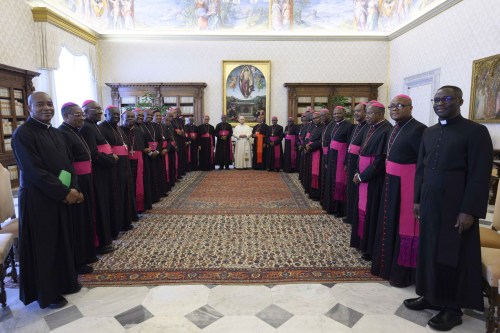
While the ‘First World’ Church may be in a state of managed retreat, the institutional empire is undergoing a radical, high-stakes re-engineering. Three seemingly disparate events of 2026 reveal the outlines of a deliberate theo-civilisational strategy: the Pope’s handling of a researcher investigating Opus Dei, the demographic explosion of ultra-conservative Catholicism in Africa, and the elevation of a cardinal from scheduled communities to lead the Indian Church.
Together, these constitute a masterclass in institutional survival, narrative management, and the conquest of what the Church has historically called the harvesting field.
For the decentralised, pluralistic, and often organisationally stagnant traditions of Bharat, this represents an existential challenge. If Hindu institutions do not fast-track their own adaptation—not through optics, but through a genuine reckoning with their own spiritual inheritance and its social implications—they will find themselves outmanoeuvred by a global machine that has learnt to weaponise the very narratives of social justice, science, and identity politics that the Hindu world currently struggles to articulate.
The Opus Dei Masterclass: Centralisation via ‘Justice’
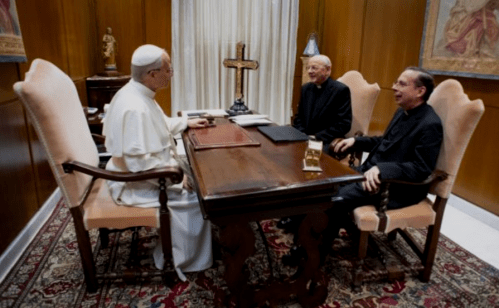
In April 2026, Pope Leo XIV granted a televised audience to Gareth Gore, a researcher whose dossier on Opus Dei has meticulously documented decades of financial manipulation and systemic [sexual] abuse. To the casual observer, this looked like a moment of unprecedented transparency, a win for justice. To the student of ecclesial statecraft, it was something else entirely: the neutralisation of a rival power centre.
For close to a century, Opus Dei functioned as a state within a state. Its status as a personal prelature made it a sovereign entity within the Church, answerable only to the Pope. It was the Vatican’s secretive elite network, one that controlled banks, influenced the US Supreme Court, and funded global conservative movements. But a sovereign satellite is always a potential threat to the centre.
By ‘listening’ to the critics and inviting the cameras, the papacy achieved two goals:
1. Optical Absolution: It signalled to the secular world that the Church is the ultimate arbiter of morality, even when investigating its own.
2. Structural Integration: Under the guise of reform, the Pope may be effectively stripping Opus Dei of its exceptional autonomy, with the aim of folding its formidable financial and political assets more thoroughly into the standard hierarchical structure.
The Church understands that a powerful group is an asset only if it is subservient.
Hindu society, by contrast, is a collection of autonomous sampradayas and mathas that often act at cross-purposes, with feeble efforts to synchronise their immense resources for a singular civilisational goal. The point is not to homogenise these traditions but to achieve a samanvaya (harmonisation) for civilisational survival. While the Church consolidates its elites, Hindu elites remain fragmented and disconnected from their own grassroots.
The African Vanguard: Towards a Conservative Black Pope?
While Western debates swirl around progressive experiments in liturgy and morality, the Catholic Church’s demographic future is being forged in the Global South, particularly Africa. As of 2026, the number of baptised Catholics in Africa has risen sharply to over 288 million (up from 281 million in 2023), now comprising about 20.3 per cent of the global total and nearly matching Europe’s share, which continues its gentle decline.
The demographic centre of gravity of the Catholic world has shifted decisively. This is not the liberal Catholicism of the secularised West. This is an assertive, deeply conservative faith. These are populations for whom the Church is a primary empowering force. When the Vatican speaks today, it speaks increasingly with the voice of the Global South, making it virtually immune to the ‘white colonial’ critiques levelled by secular intellectuals.
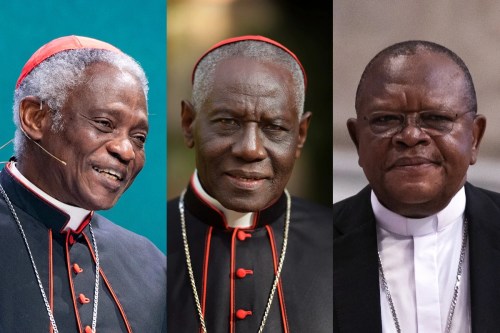
The potential election of a ‘Black Pope’—with figures like Cardinal Robert Sarah as formidable contenders—would be the ultimate optical masterstroke. It would provide a face of anti-colonial legitimacy while empowering a theological agenda far more uncompromising than anything seen in the West for a century.
This African power, however, comes with a dark lineage. The Church’s role in the 1994 Rwanda genocide is a matter of documented record. Its stranglehold on Rwandan society gave it a literal power over the life and death of millions—a power it has long lost in the West. Priests and nuns were not merely bystanders but, in documented cases, active participants or silent facilitators of the slaughter. This is the reality of totalising institutional power in the Global South: it is not a lifestyle choice or a weekend hobby but a socio-political machine capable of mobilising entire populations. As the Church’s temporal power wanes in the secular West, it is doubling down on regions where its institutional word is law, creating a base of power that is as formidable as it is dangerous.
The Dalit Cardinal: Strategic Capture and the Geopolitical Pincer
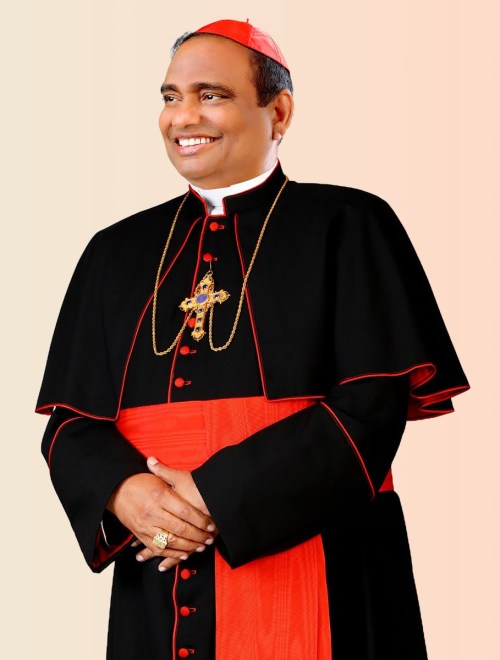
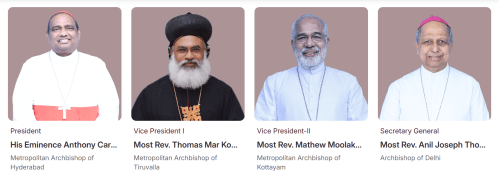
The third arm of the pincer is the elevation in 2026 of Cardinal Anthony Poola as President of the Catholic Bishops’ Conference of India (CBCI), the most powerful body of the Indian Church. In a country where caste remains the primary fault line used to destabilise Hindu society, the Church has made a brilliant administrative pivot. Poola was made cardinal in 2022 by Pope Francis and was one of the cardinal electors for the present Pope.
By placing a ‘Dalit’ leader at the summit of the CBCI, the Church has:
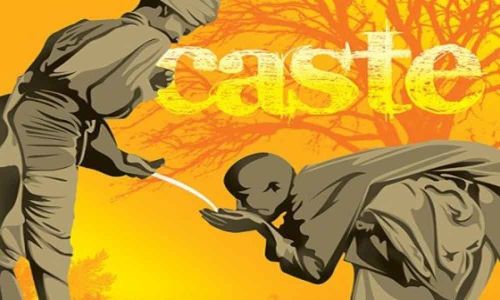
1. Neutralised Internal Dissent: This secures the loyalty of the roughly 60 per cent of Indian Catholics who are Dalits but have been historically excluded from the Church’s own power structures. It should be noted that this remains, in part, an optical strategy: despite constituting 60 per cent of the Indian Catholic population, Dalits account for only 12 out of 180 bishops.
2. Weaponised Identity: The Church can now present itself as the only institution in India capable of true subaltern integration.
The implications extend beyond the ecclesiastical. Poola and the Church hierarchy have already made politically motivated criticisms of the FCRA (Foreign Contribution Regulation Act). When a Dalit cardinal—presented as the ultimate symbolic voice of the oppressed—speaks against the regulatory regime of the Indian state, the narrative shifts. It can be positioned not as proselytisation but as social empowerment and liberation. This, in turn, provides a powerful hook for Western intervention.
Such alignment of Catholic identity politics with extra-territorial interests is not without precedent. The documented collaboration between Pope John Paul II and the CIA and Reagan administration in the 1980s to topple the Communist regime in Poland remains the clearest example. The Vatican is a sophisticated political player that understands how to align with secular intelligence and manipulate Western leaders to its ends.
Consider the scenario. A populist, maverick leader in the West seeks a moral cause to exert pressure on India. A Dalit cardinal at the helm, speaking out against ‘persecution’ and ‘funding restrictions’, provides the perfect cover. The already accumulating manufactured atrocity literature—in the form of USCIRF reports—supplies the dossier. The Western leader can position himself not just as the protector of Indian Christians but as the liberator of Indian Dalits, using the cardinal’s subaltern identity to shield what is actually an exercise of geopolitical aggression. By capturing the subaltern, the Church has not just gained a convert; it has gained a diplomatic weapon.
The Path Forward: Darshana of Social Emancipation
The solution for Hindu society is not to mimic the Church’s optics. That would be a shallow strategy and a short-lived victory. The challenge is more fundamental: Hindu institutions must close the gap between their spiritual inheritance and their social practice.
The Hindu philosophical traditions—from Advaita to Vishishtadvaita to Shaivadvaita, spanning a vast spectrum of thought about the relationship between the individual, the world, and the ultimate reality—contain within them a powerful logic of spiritual equality. Yet during the colonial centuries, Hindus, including their traditional acharyas, allowed social exclusions to be coupled with Dharma. That is more than a blunder; it has become a civilisational liability.
The task now is fourfold:
1. Decoupling Dharma from Social Exclusion: Hindu institutions must proactively address the problems of the marginalised—not because of external pressure, but because the philosophical core of their own traditions demands it. A Hindu institution, however exalted, that excludes a Hindu based on birth is an institution that has forgotten its own animating principle. The goal must be a genuine social renaissance that integrates the subaltern as a spiritual and institutional necessity.
2. Resolving Intra-Community Quarrels: Hindu society must move beyond the separate power centres of caste-based mathas that spend more time preserving their status—through the height of their ceremonial seats, or through litigation, or both—than in proactive outreach. What is needed is a unified civilisational front, one that applies the pluralistic principles present across sampradayas to resolve internal divisions rather than perpetuate them.
3. Institutionalising a Scientific-Dharmic Dialogue: Hindu society must stop defending pseudo-history and pseudo-science. Hindu dharmacharyas should sponsor spaces for genuine science to interact with the deep questions and value systems embedded in Indian thought. The multi-perspectival frameworks of Hinduism are natural homes for evolutionary biology, ecology, modern physics, and consciousness studies. What is missing is the institutional infrastructure: Hindu-funded, Scopus-indexed research that demonstrates the vitality and contemporary relevance of these traditions.
4. Capturing the Youth through Authenticity: The Western ‘Trad’ Catholic surge shows that young people crave depth and solidarity. The contemporary Hindu ‘Trad’ surge, by contrast, remains parochial, ephemeral, and largely confined to certain sections of Hindu society. By cloaking regressive social practices—untouchability, food-choice-based socio-cultural apartheid, child marriage—in the intellectualised jargon of decolonisation, the apologists for the Manusmriti do not defend Dharma; they alienate the vast majority of Hindu society from its essence.
Let us take IKS, Indian Knowledge System.
Why IKS? Because that is perhaps the single largest institutionalised Dharma-knowledge outreach to the youth Hindus have today. And this window is also closing faster than they know. The structural failure of this movement is laid bare by a single inquiry: Where are the Scheduled Community voices within the halls of Indian Knowledge Systems (IKS)?
The Scheduled Castes and Tribes, who serve as the primary repositories of India’s lived traditional wisdom, remain virtually invisible in the academic departments dedicated to studying those very systems. A few names may be rolled out, mostly as tokens. But when was the last time an IKS book was launched by a Scheduled Community academic?
This is systemic exclusion, and it reveals a troubling reality:
5. The Representation Gap: A movement that claims to restore indigenous knowledge while excluding its actual practitioners is inherently hollow.
6. The Risk of Alienation: When ‘decolonisation’ is used as a shield for obscurantism, it severs the link between the broader populace and their spiritual heritage.
7. The Threat of Extinction: A Dharma that remains the exclusive province of a few is a Dharma destined for obsolescence.
A genuine outreach must be as pluralistic as the society it claims to serve. If the Dharmic domain remains the monopoly of a narrow demographic, the result will not be a renaissance but the eventual extinction of Dharmic society in India. True preservation requires the participation of every limb of the social body. Without inclusivity, the tradition loses its pulse.
The Theo-Civilisational Battle
The battle is being fought at every level: in organisational and narrative machinery, and on the ground, in evangelical crusades and the counter-resistance mounted by their target communities.
The Church is a pincer. Hindu society is a scattered garden.
If Hindus do not fast-track the adaptation of their stagnant traditional institutions, they will watch as the Church writes the hero’s narrative and Hindu Dharma becomes a museum piece—fascinating, perhaps, but a memory.
The 2026 landscape is a warning. The Church is battle-ready. Are the Hindus?
› Aravindan Neelakandan is a contributing editor at Swarajya. The views expressed in this article are personal to the author.